Mainland Southeast Asia · TH
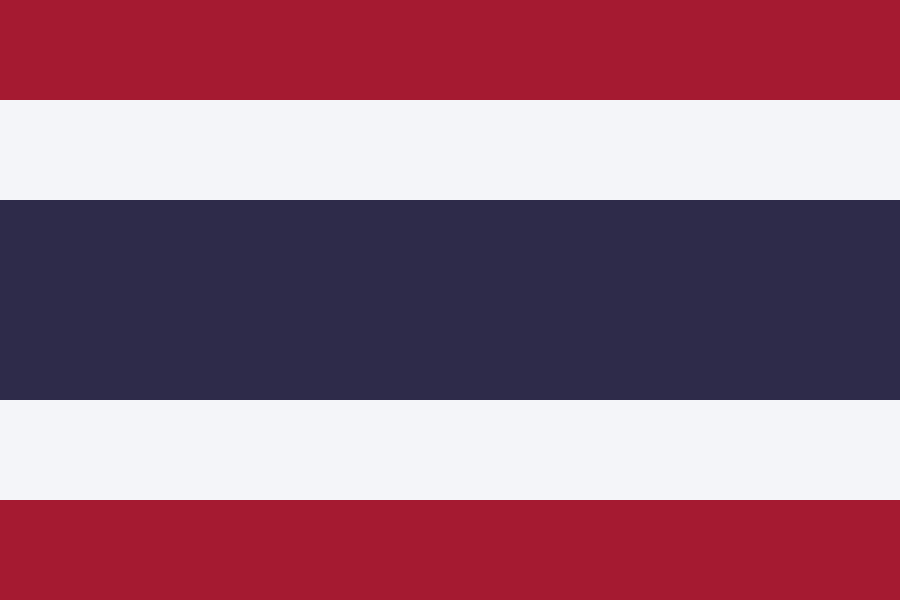
Kingdom of Thailand
Thailand's smiles anchor regional solidarity and shared hope
- Capital ·
- Bangkok
- Population ·
- 71,600,000
- Languages ·
- Thai
Join the solidarity movement
Every contribution — a story, an hour, a partnership — strengthens the network across Southeast Asia.
About Kingdom of Thailand
Thailand covers 513,120 square kilometres with a population of about 71.6 million people, making it the second-largest economy in mainland Southeast Asia. UNData records Thailand's demographic transition from a high-fertility society to an ageing one expected to reach 30% over-60 by 2035. Thai is the sole official language, while regional Isan, Lanna, and southern Patani Malay dialects add cultural depth. Bangkok, the capital, is a megacity of more than ten million residents and serves as the political, financial, and tourism centre of the country. Other major urban centres include Chiang Mai in the north, a hub for digital nomads and creative industries, and the southern tourism economy around Phuket, Krabi, and Hat Yai. Thailand's economy relies on automotive manufacturing, electronics, tourism, agriculture (notably rice and rubber), and a large export sector. As a founding ASEAN member, Thailand plays an active regional role in disaster preparedness, public health, and labour migration policy. Civil society is vibrant, covering refugees along the Myanmar border, Indigenous Karen and Hmong communities in the highlands, urban poor in Bangkok, and Buddhist environmental movements. Solidarity work spans refugee resettlement support, sustainable tourism, and post-monsoon flood recovery.
Latest from Kingdom of Thailand
Organizations working in Kingdom of Thailand
Listed organizations are provided for reference. Inclusion here is informational — confirm details before donating or partnering.
- UNHCR ThailandVerified partner
Refugee protection
- CARE ThailandVerified partner
Refugee assistance
- UN OCHA Asia and the PacificVerified partner
Humanitarian coordination
Disaster management
How to support Kingdom of Thailand
Teach English to Myanmar refugees on the border
Volunteer with community-based organisations in Mae Sot, Mae Hong Son, and Chiang Mai providing education, healthcare, and livelihood training to displaced communities.
Promote sustainable tourism in coastal provinces
Support community-based tourism cooperatives in Krabi, Trang, and Koh Lanta that channel visitor revenue into marine conservation and local schools.
Back urban food security programmes
Volunteer or donate to community kitchens and rooftop garden networks serving low-income Bangkok neighbourhoods, particularly during monsoon disruptions.
Support Indigenous Karen and Hmong weaving collectives
Buy fair-trade textiles directly from highland cooperatives; some partner with the UN Social and Economic Commission for Asia and the Pacific (ESCAP).
Strengthen migrant labour rights
Volunteer with migrant worker support centres in Bangkok, Samut Sakhon, and Songkhla that provide legal aid and Thai-language classes.
Neighboring solidarity
Countries that share close regional, linguistic, or historical ties with Kingdom of Thailand.