Mainland Southeast Asia · MM
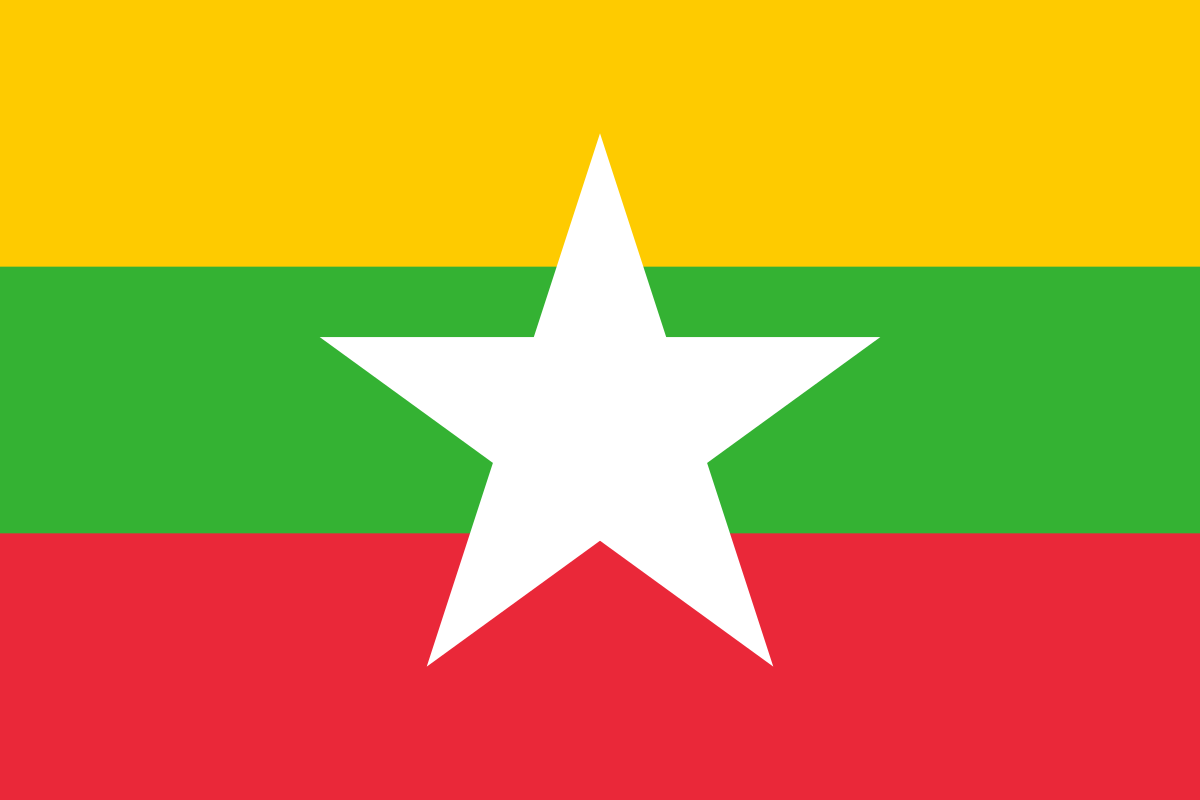
Republic of the Union of Myanmar
Myanmar's people endure crisis with quiet solidarity
- Capital ·
- Naypyidaw
- Population ·
- 54,000,000
- Languages ·
- Burmese
Join the solidarity movement
Every contribution — a story, an hour, a partnership — strengthens the network across Southeast Asia.
About Republic of the Union of Myanmar
Myanmar, the largest country in mainland Southeast Asia by area at 676,578 square kilometres, is home to more than 54 million people distributed across diverse ethnic states including Shan, Karen, Kachin, Chin, Mon, Rakhine, and Kayah. UNData records ongoing humanitarian pressure driven by conflict, displacement, and economic strain since the 2021 military takeover, with millions requiring food, shelter, and medical assistance. The administrative capital Naypyidaw was established in the early 2000s, while Yangon, Mandalay, and regional capitals remain the cultural and economic heart of the country. Burmese is the primary language, with over 100 ethnic languages spoken, including Shan, Karen, Kachin, and Chin. Myanmar's economy historically depended on agriculture, natural gas, jade, and garment exports; sanctions, currency volatility, and conflict have reshaped all of these since 2021. ASEAN has played a diplomatic mediation role through the Five Point Consensus, though implementation has been limited. Cross-border solidarity from Thailand, India, and Bangladesh supports millions of displaced people, and many international NGOs have relocated operations to neighbouring countries while maintaining community links. Honest reporting about Myanmar requires citing UN OCHA, UNHCR, and the World Bank, and avoiding inflated or unverified organisational claims. The solidarity community can contribute by funding cross-border food assistance, supporting refugee education in Thailand, and amplifying ethnic media outlets.
Latest from Republic of the Union of Myanmar
Organizations working in Republic of the Union of Myanmar
Listed organizations are provided for reference. Inclusion here is informational — confirm details before donating or partnering.
- UNHCR MyanmarVerified partner
Refugee protection
- CARE MyanmarVerified partner
Humanitarian assistance
- UN OCHA Asia and the PacificVerified partner
Humanitarian coordination
- UNDP MyanmarListed — not yet verified
Sustainable development
How to support Republic of the Union of Myanmar
Fund cross-border food and medical assistance
Donate to UN-coordinated programmes delivering rice, nutrition supplements, and mobile clinics to displaced communities along the Thai-Myanmar border.
Support refugee education in Thai border camps
Sponsor teacher salaries, learning materials, or boarding houses for Karen, Karenni, and Shan students studying in Mae Hong Son and Tak provinces.
Amplify ethnic and independent Myanmar media
Subscribe to or share reporting from Frontier Myanmar, Mizzima, and ethnic-language outlets covering under-reported regions and communities.
Advocate for inclusive ASEAN mediation
Engage with civil-society tracks like the ASEAN People Forum to keep humanitarian access and political inclusion on the regional agenda.
Neighboring solidarity
Countries that share close regional, linguistic, or historical ties with Republic of the Union of Myanmar.