Mainland Southeast Asia · KH
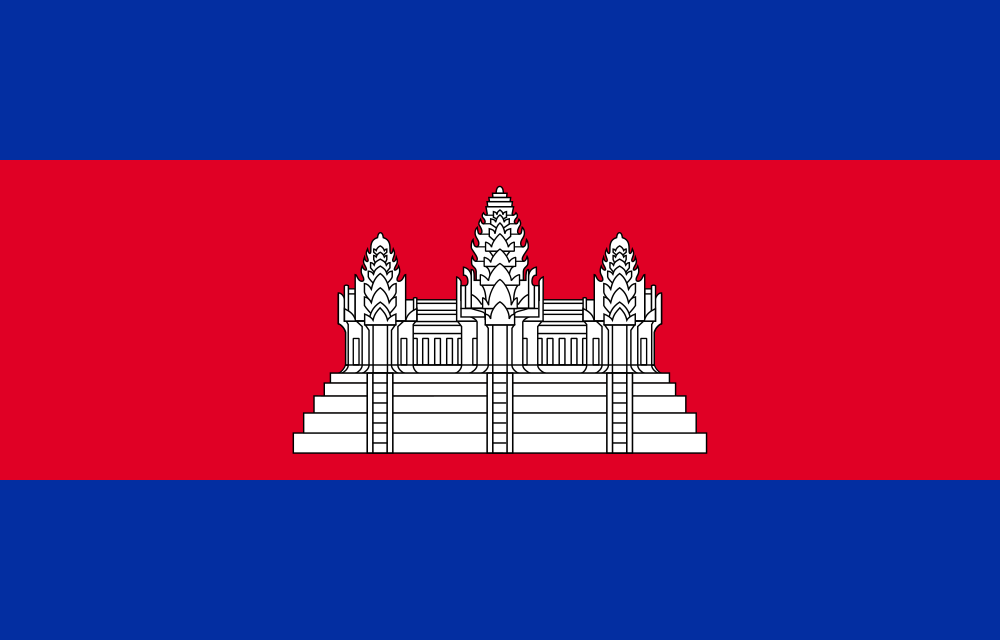
Kingdom of Cambodia
Khmer resilience powers a new generation of solidarity
- Capital ·
- Phnom Penh
- Population ·
- 17,000,000
- Languages ·
- Khmer
Join the solidarity movement
Every contribution — a story, an hour, a partnership — strengthens the network across Southeast Asia.
About Kingdom of Cambodia
Cambodia, home to more than 17 million people across 181,035 square kilometres, sits at the heart of mainland Southeast Asia, bordered by Thailand, Laos, and Vietnam. UNData records rapid urbanisation around Phnom Penh, where riverside markets, garment factories, and a growing startup scene are reshaping daily life. The country's recent history — including the legacy of the Khmer Rouge era and decades of civil conflict — has shaped a particularly strong culture of community-based mutual aid. Buddhism, practised by roughly 97% of the population, anchors social welfare through pagoda-based almsgiving, while international NGOs work alongside Cambodian organisations on education, demining, and rural healthcare. The garment sector is the largest formal employer and a major export earner, but working conditions and minimum wages are recurring concerns that solidarity movements frequently highlight. Cambodia's coastline along the Gulf of Thailand supports fishing communities, while Tonle Sap lake provides the bulk of the country's freshwater catch. ASEAN membership, formally joined in 1999, has opened regional supply chains and tourism corridors. Visitors and volunteers often work with Khmer NGOs focused on youth leadership, women in tech, environmental conservation in the Cardamom Mountains, and cultural heritage at Angkor and beyond.
Latest from Kingdom of Cambodia
Organizations working in Kingdom of Cambodia
Listed organizations are provided for reference. Inclusion here is informational — confirm details before donating or partnering.
- UNHCR CambodiaVerified partner
Refugee protection
- CARE CambodiaVerified partner
Women's empowerment
- UN OCHA Asia and the PacificVerified partner
Humanitarian coordination
- UNDP Asia-PacificVerified partner
Sustainable development
How to support Kingdom of Cambodia
Sponsor a Khmer-language library or reading room
Donate children's books in Khmer or fund a small lending library in a rural pagoda or community centre; organisations like Sipar operate mobile libraries across rural Cambodia.
Volunteer with demining and survivor assistance
CMAC and partner organisations welcome skilled GIS specialists, medics, and trauma counsellors to support landmine clearance and survivor reintegration.
Back ethical fashion cooperatives
Choose fair-trade Cambodian silk and cotton from worker-owned cooperatives; some receive technical assistance from UNIDO and Solidaridad.
Teach digital literacy in provincial towns
Volunteer remotely or in person with coding schools like Sabai Code, or partner with universities to deliver English-for-tech curricula in Battambang and Siem Reap.
Protect the Cardamom and Mondulkiri forests
Support community forests and Indigenous Bunong land rights through donations or advocacy with Conservation International and local partners.
Neighboring solidarity
Countries that share close regional, linguistic, or historical ties with Kingdom of Cambodia.